The Vote That Killed 113 Homes On Airport Road Made The 50 That Replaced Them More Expensive
September 10, 2026
September 10, 2026
Last October, Port Orange's council chambers filled with people in matching red shirts. Some carried signs. One read "Vintage Swamp." Another said "Stop overbuilding, use common sense." A dozen or more residents took the microphone, and the room applauded after almost every speaker. The item on the table was a rezoning request for 56.53 acres west of Airport Road, north of Charles Street, where a local builder wanted to put 113 detached single-family homes. The vote split 2-2, with one council member absent. A tie can't pass. The project died on the spot.
If you lived near that parcel and spent months organizing against it, that night probably felt like a win. Fewer homes. Less traffic. Less strain on the stormwater system that residents along Spruce Creek said was already failing them during heavy rain. What actually happened over the following five months is the part that should interest anyone comparing Port Orange to other Space Coast towns right now, because the story didn't end with fewer homes. It ended with fewer homes that cost a lot more.
Port Orange-based Paytas Homes, the builder behind the original proposal, came back in March 2026 with a different application for the same 56.53 acres. Instead of a Planned Unit Development with 113 homes, the new request was for conventional R-20 single-family zoning at roughly one home per acre. The council didn't split this time. It approved the comprehensive plan amendment and the rezoning 5-0, and added a policy that locks the property to one unit per acre going forward.
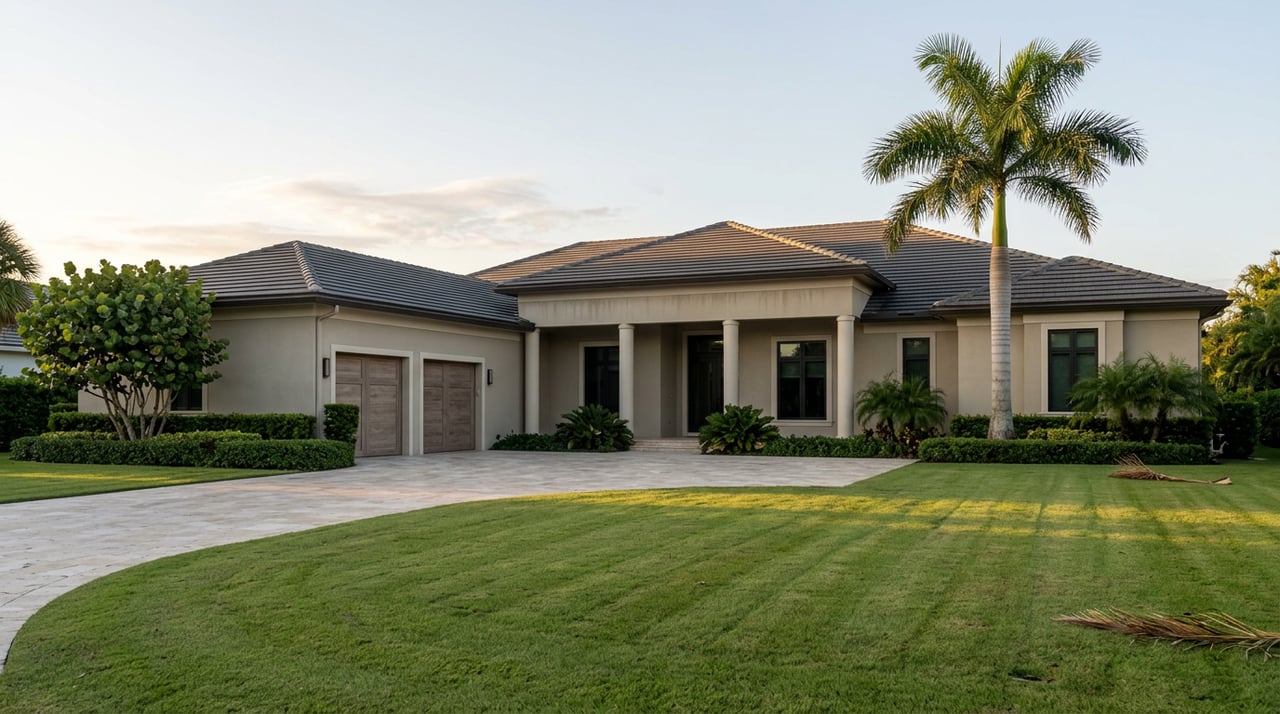
The homes on that land are now expected to run from $800,000 to $1.2 million.
That's not a typo, and it's not the builder padding margins because the market will bear it. It's what happens when a Planned Unit Development gets rejected on a parcel where the property owners can't reapply for the same PUD designation for another year. A PUD is the zoning tool that lets a builder cluster homes, mix lot sizes, and put more units on a given acreage in exchange for meeting requirements like retention pond capacity. Take that tool off the table and a builder who still wants to build is left with conventional zoning, which on this parcel meant R-20 minimum lot sizes. Bigger lots, fewer of them, and a price point that reflects one acre of land under each house rather than a quarter of it.
District 1 Councilmember Jonathan Foley put it plainly when the revised plan came up for its vote:
"You don't have a developer come around a second time all the time and work this hard to reduce density and try to bring a good project to the city."
He's right that it's unusual. What's more useful for a buyer to understand is that "reduce density" and "reduce price" are not the same instruction, even though they sound like they should be.
| First Attempt (Oct. 2025) | Second Attempt (Mar. 2026) | |
|---|---|---|
| Zoning path | Planned Unit Development | Conventional R-20 Single-Family |
| Homes proposed | 113 | ~50 |
| Density | Roughly 2 units/acre | 1 unit/acre (now capped by policy) |
| Council vote | 2-2, failed | 5-0, approved |
| Projected price | Not specified | $800,000 to $1.2 million |
The comprehensive plan and rezoning ordinances went to a final reading on May 19, 2026, the last confirmed step in the public record. Whatever the exact closing date on the first lot ends up being, the zoning math is already locked in. Fifty large-lot homes are what this land is now entitled to build, and the price range attached to that outcome was stated by the city's own planning discussion, not estimated by a listing agent trying to move inventory.
Port Orange has a lot of development moving through its pipeline right now, and residential projects lead every other category in the city's current planning and zoning activity. Airport Road isn't an isolated dispute. It's a preview of how the next fight over a rural-transition parcel near Spruce Creek Fly-In or the western edge of the city is likely to resolve if the pattern holds: a PUD gets challenged on flooding or traffic grounds, the builder pivots to conventional zoning to avoid a yearlong cooldown, and the homes that eventually get built skew larger and pricier than what the original density would have allowed.
If you're shopping new construction in Port Orange and comparing it against Cypress Head, Sugar Mill, or communities closer to Dunlawton Avenue, the zoning path behind a listing tells you more than the square footage does. A subdivision built under a PUD usually means the builder had room to mix lot sizes, which tends to produce a wider range of price points within the same community. A subdivision built under conventional zoning after a PUD got voted down tends to mean the opposite: uniform, larger lots, and a price floor set by the land basis rather than by buyer demand at any given size.
There's a second signal worth watching alongside price: how long homes are actually taking to sell. Multiple market trackers this spring put typical time on market in Port Orange in the mid-to-high 70-day range, up from the 40s and 50s a year earlier. That's not a crash. It's a market where buyers have room to be patient, which matters if you're weighing a $1.2 million new build against a resale home in an established neighborhood with more negotiating room built in.
The city's Development Activity Report is public and updated regularly, and it will show you whether a parcel near a listing you like has a pending comprehensive plan amendment or rezoning attached to it. That's worth five minutes before you fall for a model home, because the empty lot next door might not stay empty, and the zoning path it takes will tell you whether it's likely to bring homes at your price point or well above it.
It's also worth asking your builder or agent directly whether a community was approved as a PUD or under conventional zoning, and if conventional, whether that path followed a rejected higher-density application. Neither is a red flag on its own. But knowing which one you're buying into tells you something about what's realistic for future phases, resale comparables, and whether the lot sizes and price points you're seeing today are likely to hold as the rest of the parcel builds out.
Where exactly is the Vintage Acres parcel? West of Airport Road and north of Charles Street, on land that was annexed into Port Orange from unincorporated Volusia County in June 2025.
Is this the only large parcel facing this kind of fight? It's the most documented one recently, but with residential projects leading Port Orange's development pipeline this year, it's a pattern worth watching on other rural-transition edges of the city, not a one-time event.
Does a bigger lot always mean a more expensive home? Not on its own, but when a builder is required to use one-acre-plus lots instead of a flexible PUD layout, the land cost per house goes up regardless of what the finished home looks like, and that shows up directly in the price.
If you're trying to figure out what a specific Port Orange neighborhood, PUD or otherwise, actually means for your budget and your timeline, that's exactly the kind of local detail worth talking through before you write an offer. Ray Giamporcaro and The SunSpot Team track these zoning shifts across Brevard and Volusia because they change what "new construction" actually costs from one side of a city line to the other. Reach out for a consult, or start with a quick home valuation, and let's figure out where your number actually fits on the map.
Stay up to date on the latest real estate trends.
Get assistance in determining current property value, crafting a competitive offer, writing and negotiating a contract, and much more. Contact Ray today to discuss all your real estate needs!