Port Orange Homes Don't Age One at a Time
September 17, 2026
September 17, 2026
Ask a home inspector working in Port Orange why three houses on the same street can fail a 4-point inspection in the same year, for the same reason, and you won't hear a story about bad luck. You'll hear a story about a calendar.
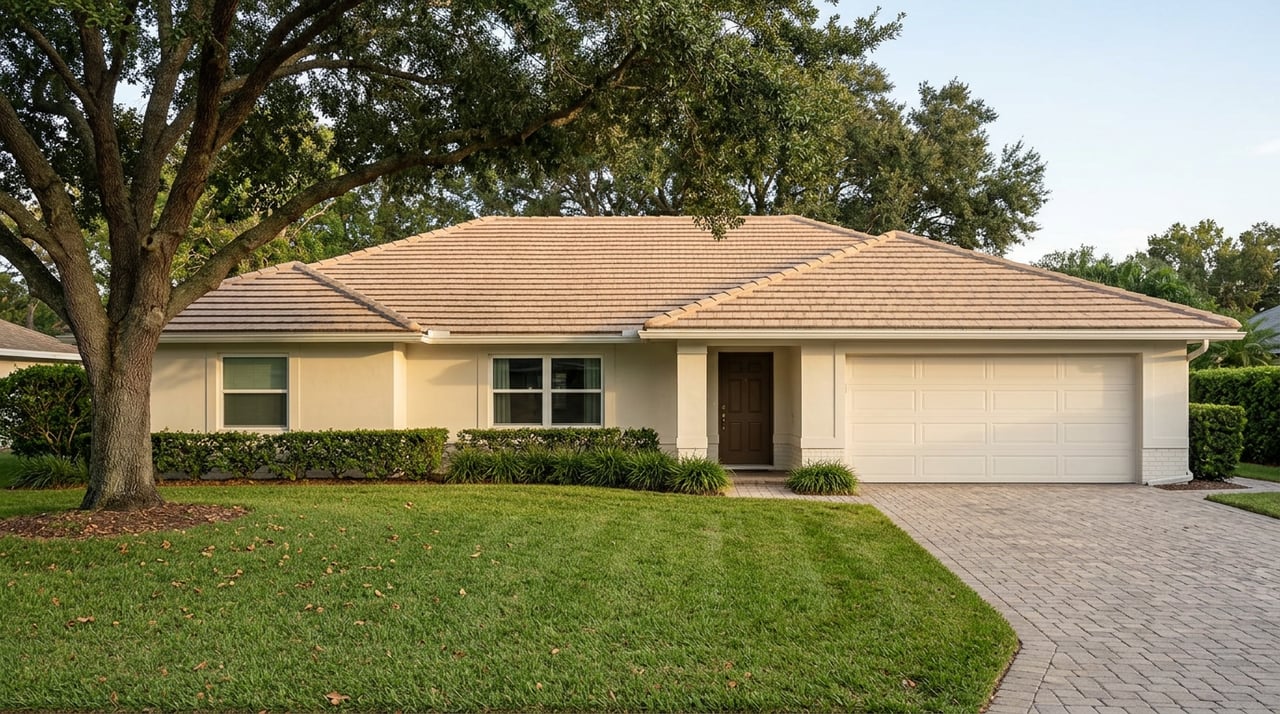
Most of Port Orange went up between 1980 and 2005, with growth pushing further west toward I-95 after 2010. That means entire subdivisions, places like Sugar Mill, Spruce Creek Fly-In, Countryside, Summer Trees, and Cypress Head, were built out in tight construction waves. The roofs went on within a few years of each other. The HVAC systems were installed on the same schedule. The water heaters came from the same supply chain during the same building boom. When a house in one of these neighborhoods hits an insurance age threshold, the house next door is usually only a year or two behind it.
That's the part most buyers don't factor in when they fall for a well-kept 1990s ranch on a quiet street. The home itself might show beautifully. The clock underneath it doesn't care.
A full home inspection in Port Orange typically runs two to four hours and covers roof, structure, electrical, plumbing, and HVAC, but the systems doing the most damage to a deal aren't structural. They're mechanical, and they're all reaching the same age together.
HVAC systems from the original 1990s and early 2000s construction wave are now sitting at fifteen to twenty five years old, often with rusted evaporator pans and, in a lot of cases, R-22 refrigerant. That refrigerant is no longer legally produced in the United States. If a unit that old needs a recharge, you're not looking at a repair. You're looking at a replacement, because there's no legal way to simply top off the refrigerant anymore.
Water heaters past the twelve year mark show up too, frequently without an expansion tank or drain pan on interior closets, which is exactly the kind of detail a 4-point inspection is built to catch.
Roofs matter for a different reason. Insurance underwriting in Florida has loosened somewhat in 2026, with some carriers pushing their 4-point inspection trigger back from the old 20 year standard to 25 or 30 years. But roof age still drives your wind mitigation credit, and a re-roof that skipped deck re-nailing to current code costs you that credit even though the shingles themselves are brand new. Florida also updated its wind mitigation inspection form this past April for the first time in more than a decade, so a report from before that update may not hold up with your carrier the way it used to. A fresh one runs around $100, stays valid for five years, and can shave real money off a windstorm premium depending on what the home qualifies for.
Here's roughly how that plays out by construction era:
| Built | What's typically aging into trouble now |
|---|---|
| 1980s | Original HVAC long since replaced, but electrical panels and early plumbing runs start drawing carrier attention |
| 1990s | HVAC systems at 25+ years, R-22 refrigerant risk, water heaters well past service life |
| Early 2000s | HVAC entering the 20 to 25 year danger zone, roofs approaching second-replacement age |
| Post-2010 (west toward I-95) | Generally the cleanest 4-point profile in the city right now |
The pattern holds because Volusia County's building stock outside the newest growth corridor was assembled fast, in blocks, by the same handful of builders working the same subdivisions in the same years. A buyer who treats a 1994 HVAC system as a one-off maintenance item is missing that it's a neighborhood-wide indicator, not a house-specific one.
Most buyers who want to check a home's history before writing an offer pull up a county permit portal, search the address, and see nothing. They read that as good news.
It isn't necessarily.
The Volusia County Building Division only issues permits for unincorporated parts of the county. If the address sits inside Port Orange city limits, which almost every residential address in this market does, the county's own portal will return zero results no matter what work has actually been done on the house, because that work would have been filed with the City of Port Orange's building department instead, not the county's.
That's an easy mistake to make, and it's one that produces exactly the kind of false confidence that gets discovered during underwriting instead of before an offer. The city runs its own permit portal for exactly this reason, and the Volusia County Property Appraiser's office maintains a page that routes you to the correct jurisdiction before you waste time on the wrong one.
Older homes in this market carry a version of this problem even when the permit history is complete. Decades of small, accumulated work, an enclosed porch, an added bath, a converted garage, can pile up with thin or missing permit records long before anyone thinks to check. The fix isn't complicated. It's asking for the records before you're under contract, from the right portal, instead of assuming a blank county search means a blank history.
Port Orange sits on the mainland side of Volusia County, and its documented weather risk looks different than the beachside towns it borders. Hurricane Ian in 2022 made that concrete for a lot of homeowners here: the water that came into Volusia neighborhoods well away from the ocean arrived from rain overwhelming stormwater systems, not from surge. Stormwater capacity in the older subdivisions, proximity to retention ponds, and lot-level grading matter more to this risk than the coastline does.
There's a wind-speed dimension to this too. Volusia County sits on a transition zone where the ultimate design wind speed for typical construction runs near 130 mph along the Atlantic beachside and steps down as you move west toward DeLand. Where a specific Port Orange address falls on that gradient affects what a wind mitigation inspection can realistically credit, which is one more reason a fresh, current-form inspection matters more than an assumption based on a neighbor's older report.
A few habits catch most of what trips up Port Orange buyers before it becomes a closing problem:
Does a clean county permit search mean a Port Orange home has no unpermitted work? No. The county's portal only covers unincorporated Volusia County. Any address inside Port Orange city limits will show zero permits there regardless of what's actually been done, because that work would be filed with the city instead.
Will an older HVAC system automatically fail a 4-point inspection? Not automatically. The inspector documents age and condition, and your carrier decides from there. The bigger problem is R-22 refrigerant. Since it's no longer legally produced in the U.S., a system that needs a recharge is really facing a replacement decision, not a repair.
Is Port Orange's flood risk the same as the beachside towns? Not in the way most people assume. Beachside communities deal with storm surge. Port Orange's exposure, visible during Hurricane Ian in 2022, came from inland rainfall overwhelming stormwater systems, which is a different conversation with an insurer than surge coverage is.
Buying in Port Orange means buying into a neighborhood's timeline as much as a house's condition. If you're weighing a specific address, or trying to figure out where a subdivision actually sits on that aging curve, Ray Giamporcaro and The SunSpot Team can walk the permit history and inspection picture with you before you're locked into a contract instead of after.
Stay up to date on the latest real estate trends.

Get assistance in determining current property value, crafting a competitive offer, writing and negotiating a contract, and much more. Contact Ray today to discuss all your real estate needs!