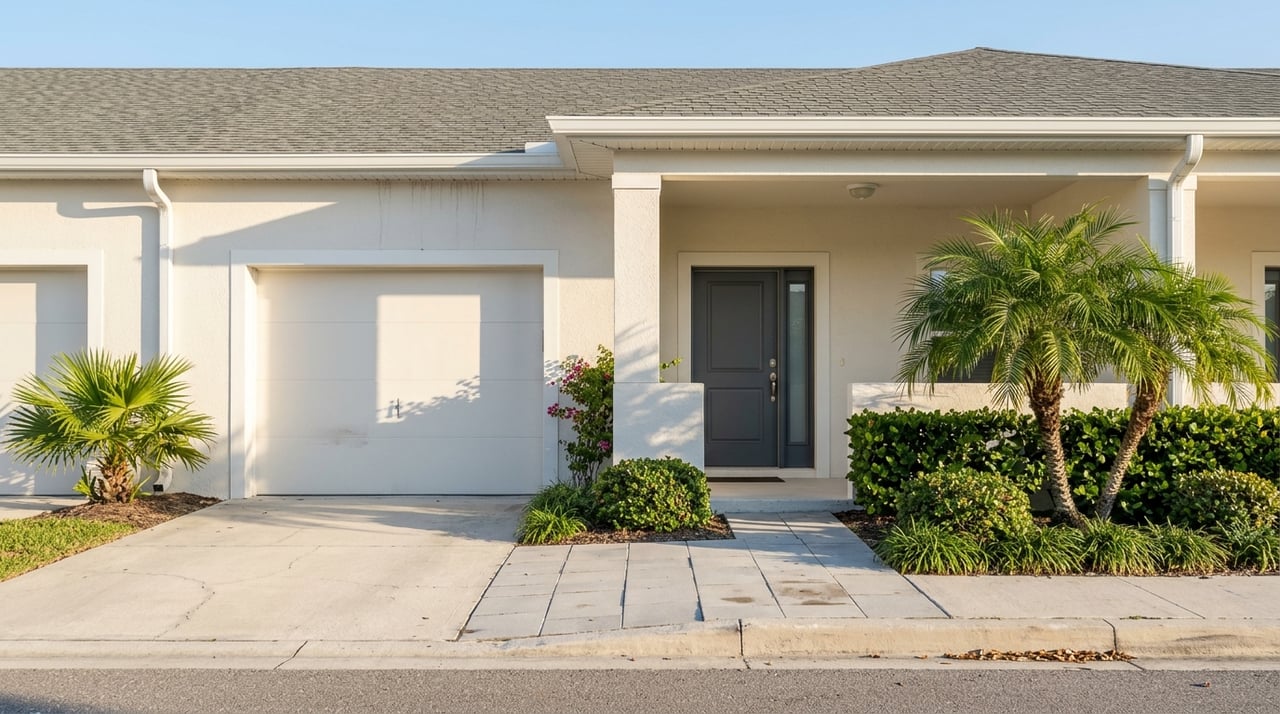
Port Orange Townhomes Guide to Villas and Easy Living
June 11, 2026
June 11, 2026
If you want a home that gives you more freedom and less upkeep, Port Orange townhomes and villas deserve a closer look. Many buyers today want a place that feels comfortable and functional without the constant time, cost, and effort that can come with a larger yard or heavier exterior maintenance. In this guide, you’ll learn what low-maintenance living can look like in Port Orange, what types of homes are available, and which details you should verify before you buy. Let’s dive in.
Port Orange is well positioned for buyers who want a simpler day-to-day lifestyle. The city’s planning framework includes townhomes, villas, cluster homes, and duplexes as part of its residential mix, and it specifically notes that attainable housing can include townhomes and duplexes.
That matters because it shows attached and lower-upkeep housing is not an afterthought in Port Orange. It is already part of how the city plans for housing options, which gives buyers a broader range of choices when they want less exterior work and a more manageable footprint.
Lifestyle also plays a big role. Port Orange describes itself as just south of Daytona Beach and about an hour from Orlando, and the city highlights parks, recreation, and active-lifestyle amenities that naturally pair well with low-maintenance housing.
The Parks & Recreation Department maintains more than 475 acres, 28 parks, 6 boat ramps, and 12 boardwalks or fishing piers. For residents age 55 and older, the Adult Activity Center is open at no fee and offers activities like pickleball, bocce, and shuffleboard. If you would rather spend time enjoying the area than handling yard work, that setup can be a real advantage.
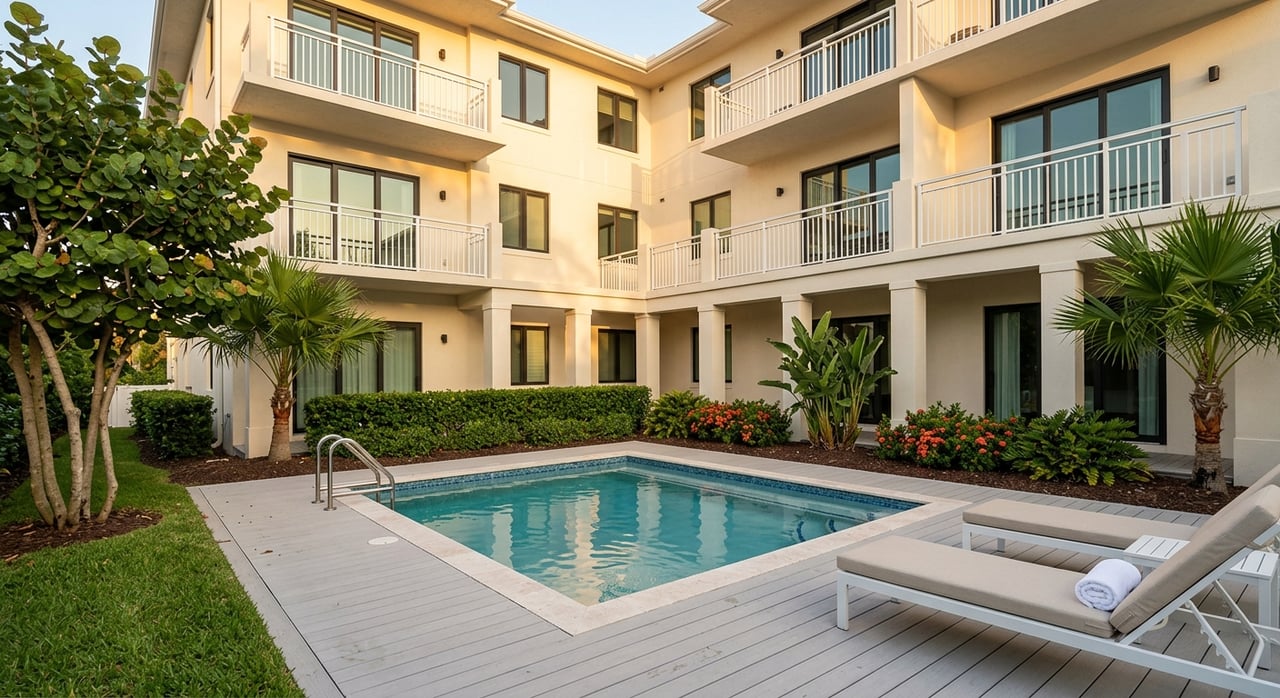
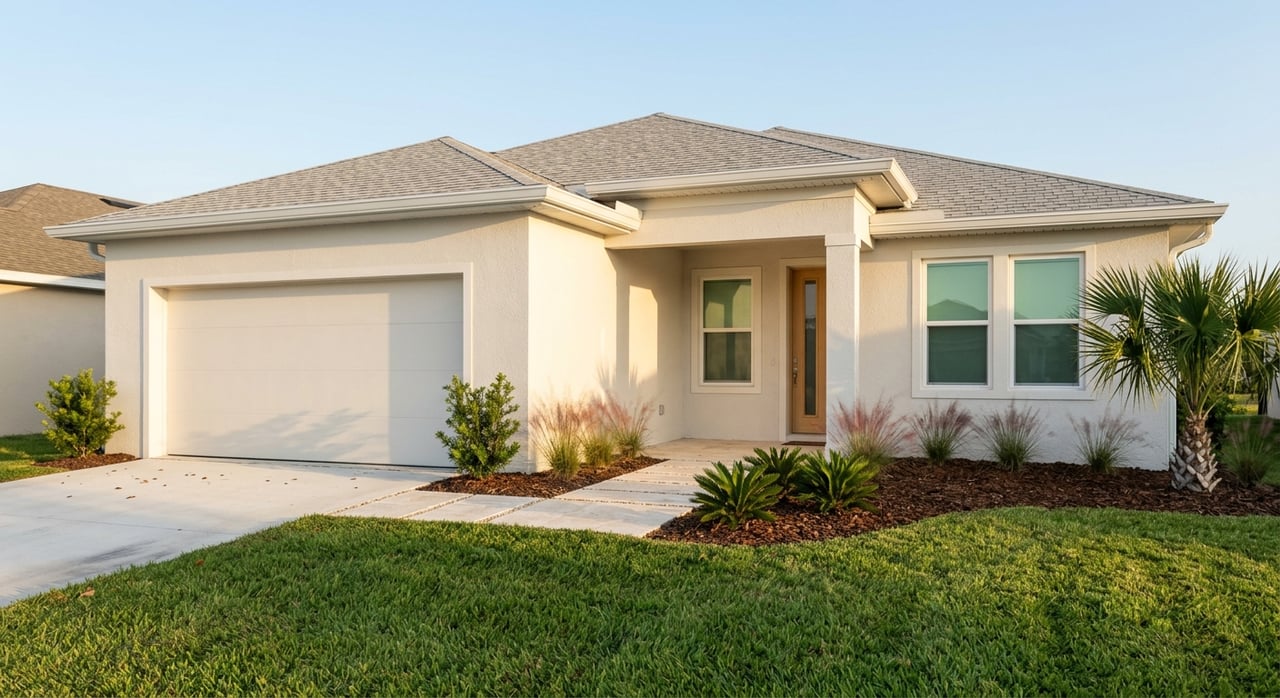
Townhomes and villas in Port Orange can vary quite a bit in size, layout, and ownership structure. In practical terms, buyers will often find homes with compact but useful floor plans, modest lot sizes, and some inventory with attached garages.
One current example is Woodhaven, where builder marketing describes gated, low-maintenance townhomes with 2 to 3 bedrooms, 2 to 3 baths, 2-car garages, and roughly 1,562 to 2,097 square feet. Public resale listings in Port Orange also show smaller townhomes around 1,056 to 1,128 square feet and larger options around 1,624 to 2,095 square feet, usually with 2 to 3 bedrooms and 1.5 to 3 baths.
That range is helpful if you are trying to balance budget, space, and upkeep. Some buyers want a smaller footprint that feels easy to lock and leave, while others want enough room for guests, a home office, or single-level daily living with less exterior responsibility.
In Port Orange, the word villa does not point to one single home style. The city’s land-use definitions place villas, cluster homes, and townhouses in medium-density categories, and townhouses can also appear in high-density residential categories.
For you as a buyer, that means the label alone is not enough. A villa may look and feel very different from one community to another, so you should confirm the actual building type, how the property is legally structured, and what maintenance duties come with ownership.
This is especially important in Florida, where some villa communities may be set up as condominiums rather than standard HOA communities. That can affect who handles exterior maintenance, who pays for certain repairs, and how expenses are divided.
If you are comparing townhomes and villas to detached homes, pricing context helps. Public market data varies by source and timing, but it generally shows Port Orange with typical or median home values in the mid-$300,000 range.
For townhomes specifically, public listing portals have shown roughly 53 to 57 active listings, with median listing prices around $230,000 to $280,000 depending on the dataset. These sources are not identical, so it is smartest to treat them as directional rather than as one exact price point.
The key takeaway is that townhomes can offer an entry point or alternative to detached housing, depending on the community and condition. Newer low-maintenance products may price higher, while resale options may give you a lower purchase price with a different set of features or updates.
If you are looking for a home that supports a more simplified lifestyle, Port Orange also has 55+ communities that reinforce the low-maintenance appeal. These communities show that downsizing in Port Orange is not limited to one housing type.
Royal Palm is a gated active-lifestyle community with townhomes and single-family homes, plus amenities that include a 12,000-square-foot clubhouse, bocce, shuffleboard, and tennis. Summer Trees is another gated 55+ community known for low-maintenance single-level living.
For buyers focused on convenience, these options can be appealing because they combine shared amenities with a housing style that may reduce routine exterior work. As always, it is important to verify exactly what the association maintains and what remains your responsibility.
Low-maintenance does not mean no-maintenance. In Port Orange, and in Florida more broadly, the real answer depends on the community’s governing documents and whether the property falls under an HOA or a condominium structure.
Florida law requires HOA governing documents to describe how expenses are shared and each member’s proportional share. Associations must also prepare annual financial reports, and estoppel certificates must be issued within 10 business days of a request.
Florida law also allows reserve accounts for capital expenditures and deferred maintenance. If reserves are not fully funded, the annual financial report must warn that special assessments may result. That is why the budget, reserve schedule, and estoppel certificate are must-review documents during your due diligence.
For condominiums, Florida law generally says the association is responsible for common elements unless the declaration assigns certain limited common-element maintenance to the unit owner. That distinction matters because a villa that looks like a detached or semi-attached home may still have a maintenance structure that operates more like a condo.
City-approved development documents in Port Orange show how broad association authority can be. In one approved agreement, the HOA is responsible for operating, maintaining, and controlling common areas, common facilities, and stormwater drainage systems.
That same agreement also gives the HOA authority to set landscape-buffer standards, enter lots to maintain buffers, and charge owners for that work. So while a community may be marketed as low-maintenance, you should not assume every exterior item is covered or that you have unlimited freedom to make changes.
Florida’s HOA architectural-control rules also matter here. Association authority over exterior appearance must be supported by the declaration or published guidelines, and the law specifically references hurricane-protection products such as shutters, impact-resistant windows and doors, reinforced garage doors, and related systems.
In a coastal Florida market like Port Orange, that is a major practical issue. Before you buy, confirm who approves, installs, maintains, and pays for those items.
When you tour Port Orange townhomes and villas, focus on specifics instead of broad promises. The right questions can help you understand the true cost of ownership and avoid surprises after closing.
Here are some of the most important questions to ask:
These questions are not just nice to ask. They get to the heart of whether the home will truly support the easier lifestyle you want.
Port Orange townhomes and villas can work well for several kinds of buyers. If you are a busy professional, lower exterior upkeep can free up more time for work, travel, and recreation.
If you are downsizing, you may appreciate a smaller, more efficient layout with fewer maintenance tasks. If you are buying your first home, a townhome may offer a practical way to enter the market while still giving you private living space and, in some cases, a garage and community amenities.
The broader appeal comes back to lifestyle. With Port Orange’s parks, boardwalks, launches, and activity options, many buyers are looking for a home that supports how they want to live, not just where they want to sleep.
The best townhome or villa is not always the newest one or the one with the lowest dues. It is the one that matches your budget, your daily routine, and your comfort level with the association’s rules and financial health.
As you compare communities, look at the full picture. Consider the floor plan, garage space, guest parking, age of major components, dues, reserve funding, and the actual maintenance checklist spelled out in the documents.
You should also think about how you plan to use the home over the next few years. A home that works well today should still make sense if your work pattern changes, guests visit more often, or you want a property that is easier to leave for weekend trips or seasonal travel.
If you want help sorting through Port Orange townhomes, villas, or 55+ low-maintenance options, Ray Giamporcaro can help you compare communities, understand the fine print, and find the right fit for your lifestyle.
Stay up to date on the latest real estate trends.
Get assistance in determining current property value, crafting a competitive offer, writing and negotiating a contract, and much more. Contact Ray today to discuss all your real estate needs!